Friday, February 5, 2010

Anne of Bleak House

The vale of tears is but the pathway to the better country.
C H Spurgeon


If you plan on reading Before Green Gables, by Budge Wilson, don’t read this post!  It’s full of spoilers, such as, Anne takes a train to Prince Edward Island in the last chapter, to be adopted by Marilla and Matthew Cuthbert. (Oops!) 

Or, if you don’t like reviews, skip past this one, for words of hope and  grace from the Scriptures, Paul David Tripp and Spurgeon!  It’s really all related, somehow.

~~~~Review~~~~

Before Green Gables, by Budge Wilson was on my must-read list that I posted HERE.  This book was given to me by an extremely devoted fan of Lucy Maud Montgomery, who has read every single one of her books–none other than my son-in-law, Andrew.  He hasn’t read this book yet,  so I hope he doesn’t read my review. 

For fans of Lucy Maud Montgomery, Anne of Green Gables, Avonlea, Windy Poplar, this self-proclaimed, “Prequel to Anne of Green Gables” may be received with mixed emotions.  You can probably detect my sentiments by the title of this post. 

The book starts off much like any other ”Anne” read, and one falls immediately in love with her endearing parents, Walter and Bertha Shirley.  But we know, before ever opening the book,  Anne could never have boarded that train to Prince Edward Island if things went well for the sweet Shirleys.  They die…and the bleakness begins.

Anne’s life goes from bad to worse, as she’s taken in by an angry, over-worked mother of five, with an alcoholic husband.  Fast-forward eight or nine years, and she’s placed with another family with three sets of twins under four years old, then finally, on to a Dickensesque orphanage.  LMM alluded (in her books) that trials were the very making of young Anne, so I was prepared for some hardships.  However, I couldn’t help but yearn for more light and happiness for our “Anne girl.”   As one reviewer on amazon. com wrote, “the only thing that bothered me about the book was that it was DEPRESSING.”

However, I could get past the bleak backdrop of her daily life, knowing that Green Gables lay in wait for Anne in a mere 11 years… But, the most disturbing aspect of the story was the uber-wise, hyper-intellectual Anne of 4 years old!  True, she’s a unique, gifted, insightful, opinionated and verbose young lady when we and Matthew Cuthbert first meet her, but as a toddler (?)–her thoughts, emotions, and conversations depart from reality too much for this reader.   

Well then, do I recommend the book?  Actually, yes!  Surprise!!  The bleakness of Anne’s childhood contrasts so significantly with Green Gables and Avonlea, that the reader gains a greater appreciation for all that lies ahead for our kindred friend, making the real Anne series shine brighter, happier, and thankfully, full of promise and hope.

~~~~End of Review~~~~


Our lives are much like Before Green Gables, filled with pages, or maybe chapters, of struggles and difficulties, highlighted with some joys and a lot of grace.  We don’t know what a turn of the page will bring, but we do know how the story ends! 

 ”Truly, truly, I say to you, whoever hears my word and believes him who sent me has eternal life. He does not come into judgment, but has passed from death to life.” John 5:24

The riches of such an ending, or beginning, is beyond our understanding: 

 ”As it is written, ‘No eye has seen, no ear has heard, no mind has conceived what God has prepared for those who love him.’”  I Cor. 2:9 


Paul David Tripp, puts it like this:

“The world is still a terribly broken place, not yet restored to what it was created to be. [But] we live with celebration and anticipation.  We celebrate amazing gifts of grace what we’ve already been given, while we anticipate the end of the struggles that will face us until the final chapter of the great story of redemption comes.

We do live in the in between. We do live in the hardships of a world that teeters between the beginning and the end.  But we dont need to be discouraged and we don’t need to fear, because the end of all those struggles has already been written, and so we’re guaranteed that the things that are not, yet will someday be!” [1]

 [1]  Paul David Tripp, Whiter than Snow: Mediations on Sin and Mercy, Crossway Books, 2008. Wheaton, IL.  pg 92.

~~~~~~~~~~~~~~~~~~~~~~~~~~~~~~~~

Want some other perspectives of the reviewed book?  Try here:

http://www.guardian.co.uk/books/2008/apr/05/featuresreviews.guardianreview28

http://www.amazon.com/Before-Green-Gables-Budge-Wilson/dp/039915468X

[Via http://absolutegrace.wordpress.com]

Wednesday, February 3, 2010

Tickle Me Pink!

I got home last evening after a long (emotional) day, and found something in my mailbox to “Tickle Me Pink!”...

Healthy Eating with Kelly Cookbook

Yay!!!

It was the cookbook I won in a contest a few weeks ago from (my seemingly long-lost BFF) Kelly @ My Healthy Passion.

I had no idea Kelly had even written or published a cookbook – so I was extremely excited and happy to participate – let alone win!

To provide a little background on the fabulous Author, Kelly has her personal training license from The American Fitness Training of Athletics (AFTA), and is a certified Nutrition Manager from The American Academy of Sports Dieticians and Nutritionists (AASDN). She writes in the book’s introduction:

“My passion is to show people that healthy living can be a lifestyle that is obtainable and not a sacrifice…eating healthy is easy, fun, and, best of all, it can taste REALLY good!”

True story Kelly!

Her cookbook (now mine! hah) includes: Appetizers, Salads, Vegetables and Side Dishes, Main Dishes, Meatless Dishes, Breads and Muffins and Desserts.

What I really like about it is that it contains a nutritional breakdown of each recipe listed, substitiutions for ingredients (i.e what can you use if you don’t have butter or chocolate squares in the pantry?), equivalents (i.e how many ounces of cheese = a cup), a description of various herbs (nice!), and a glossary of common cooking terms (now I finally know what “braise” means haha!).

As well, for those who are perhaps “going green” or looking to save money, there are some great “recipes” for common household cleaning subsitutions listed at the end of the book, from cleaning your countertops to your oven or sinks!

I love this Kelly!

Thus far, I have my eye on a Chicken Enchilada Casserole, Black Bean Burgers, Peanut Butter and Jelly Muffins and Pumpkin Raisin Cookies…:)…and those are just the beginning!

LOVE IT!!!

HUGE THANKS TO KELLY!! Please check out her Blog if your interested in her cookbook or just reading her good vibes :)

~~~~~~~~~~~~~~~~~~~~~~~~~~~~~~~~~~~~~~~~~~~~~~~~~~~~~~~~~~

And now, as an aside, a few questions pour vous:

1) Do you enjoy cookbooks? What is/are your favorite(s)?? ;

2) What usually “sells you” on a cookbook? (Recipes, Presentation, Nutrition, popularity,etc.);

3) (and – this has nothing to do with cookbooks – hah :) – but: Any recommendations on a good writing Laptop – portable, economical, efficient, lovely! ??? (and how long do laptops usually “last” for???…)

Peace & Love To You All :)

(P.S – To those on Blogspot – I can’t comment at all – it hasn’t let me the last few days…:( )


[Via http://eatmovelove.wordpress.com]

February 2nd...

Groundhog’s Day(My buddy, Larry, made this postcard… thanks Larry!)

For being 123 years old Punxsutawney Phil has eyesight enough to still see his shadow.  That means six more weeks of winter.  If you’re wondering what Groundhog’s day is all about, click here.  (you can learn great little facts like Phil’s full name… Punxsutawney Phil, Seer of Seers, Sage of Sages, Prognosticator of Prognosticators and Weather Prophet Extraordinary)

Or if you want more info on other weather predicting rodents click here.  Don’t forget about Cape Cod Quahog Day?

So we’re celebrating, or mourning, Groundhog Day at Bookworks on our ‘coffee table.’ Stop by, grab a coffee and cookie, and peruse the store.

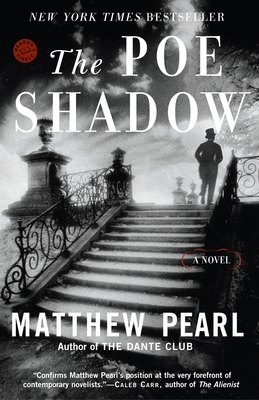
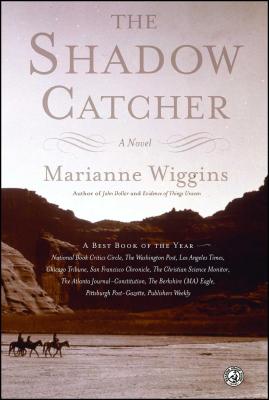
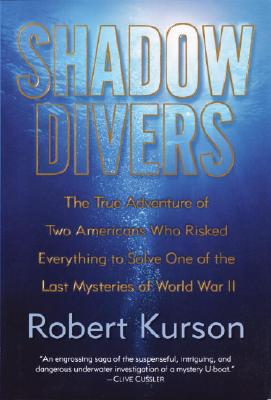
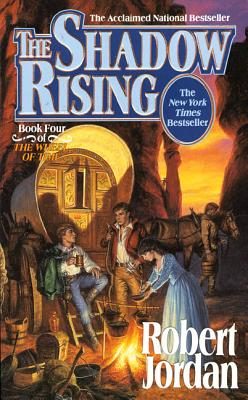
Check our selection of “shadow books” displayed on our Coffee Table
The Poe Shadow

The Poe Shadow by Matthew Pearl
The Shadow of the Wind

The Shadow of the Wind by Carlos Ruiz Zafon
The Shadow Catcher

The Shadow Catcher by Marianne Wiggins
Shadow Divers: The True Adventure of Two Americans Who Risked Everything to Solve One of the Last Mysteries of World War II

Shadow Divers by Robert Kurson
The Shadow Rising: Book Four of

The Shadow Rising by Robert Jordan

Happy Birthday James Joyce


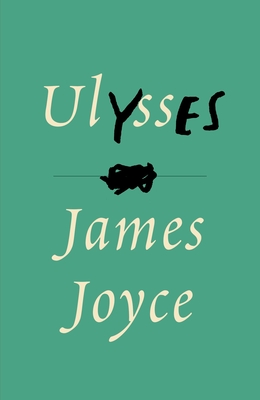
Dick is celebrating February 2nd for a far more literary reason…not only is it Joyce’s birthday, but also the anniversary of the publication of  Ulysses, what many consider his masterpiece.
Ulysses

A complete list of his publication dates is found here.

One more thing….

The New York Times Book Review had an article on Patti Smith’s Just Kids.  Smith notes Mapplethorpe’s love for Andy Warhol, one of the few things the pair didn’t share.  She says “I hated the soup and felt little for the can.”  

After sharing this with me, Dick adds, ” I think she and I could have had a great life together.”  He’s probably right…He usually is.

[Via http://nantucketblogworks.com]

News post is newsy

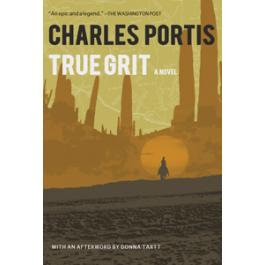
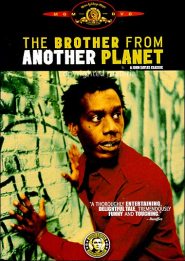
Charles Portis True Grit OverlookBrother From Another Planet John Sayles

Two great tastes that taste great together…

A quick round-up post:  my life in coffee spoons.

  • I recently watched John Sayles’s cult classic, Brother From Another Planet on Netflix.  Joe Morton is fantastic, and there’s something so strangely nostalgic about seeing the old New York City of the 1970s and 80s.  The dirty, downcast, dangerous city that made Griffin Dunne afraid for his life.  The city of Sesame Street and Lo Pan.  The city you used to have to escape from, like the Thunderdome.  I lived for a while in Morningside Heights, and ah yes, on more than one occasion I was one of those dopey white kids who strayed from the Columbia campus and walked at a brisk clip, whistling nervously, in what I hoped was the direction of home.  No one ever bothered me.   Anyway, BFAP is short on plot and budget but long on style, character, and smarts.  The goofy barfight choreography alone is worth the price of admission.
  • I’ve been listening to Charles Portis’s novel True Grit on CD, read by Donna Tartt.  The book was recently reissued by Overlook Press, with a gorgeous cover and an essay by Tartt.  It is, as Tartt points out, a masterpiece.  I was struck in particular by how sad it is, and by how much it made me nostalgic for another dingy, unpleasant past–the Old West, in this case.  I have zero reason to nostalgize the American Southwest, and the nostalgia I feel is strangely impersonal, or maybe impartial.  It’s as if I feel nostalgia on behalf of the characters–as if Mattie Ross and Rooster Cogburn are so real to me that I mourn their younger years for them.  It’s one of the stranger reactions I’ve ever had to a book, and also one of the stronger ones.  I came away feeling that Mattie Ross had her best years as a child, that she never fit into the adult world (or she fit too well into its stereotypes), and that even though she lived to old age, a large part of her life was over when she came home from the hunt for her father’s killer.  The hunt itself is so alive, so purposeful and directed–and what’s left after it’s done?  Mattie’s father is still dead, and she has to grow up and find her own way in the world, and Rooster Cogburn is no help with that.  It’s a brilliant, brilliant book, and I recommend Tartt’s reading of it.  (She does accents.)
  • In completely other news, the Internet has been recasting popular movies and television  shows (and now books!) with people of color.  I love this.  You can find a list of many sample recasting jobs here.
  • Leaping away again, I continue to post semi-regularly at Reading Local Portland.  One recent highlight:  a reading at Powell’s bookstore by Nick Flynn.
  • And in a final segue, I’ve been working on a lightning talk for the last week–who knew five minutes’ worth of monologue could take so.  Bloody.  Long.  To prepare?  Not I.  The fault is mine; the topic is “the future of publishing,” with an emphasis on the digital.  Well done, me.  Of course, I’m working on this in the midst of the iPad release and the Amazon/Macmillan kerfuffle, and everything is feeling very WAIT WAIT HOLD ON WHILE I TYPE THAT UP.  It’s also feeling very much like Amazon is perhaps not the best and greatest thing for authors, publishers, and booksellers.  I’m frustrated with Amazon, and growing more and more determined to spend my money with local bookstores.  Which I just did, ordering a copy of True Grit.  Thus closing the circle of my post, almost.  Ta da.

Seriously, buy local.  Read local.  It matters.

[Via http://munrovian.wordpress.com]

Monday, February 1, 2010

Made to Stick

Made to Stick is Dan and Chip Heath’s first book. This book is for EVERYONE who has an idea and wants it to be accepted. Whether you have a business idea and you need to convince partners, bankers, or lenders, or project ideas and you need to convince team partners and others of its merits, this book becomes a “guide” that will help you communicate your ideas in the most effective way possible.

From the book: Mark Twain once observed, “A lie can get halfway around the world before the truth can even get its boots on.” Meanwhile, people with important ideas, struggle to make their ideas ’stick’.

Why do some ideas thrive while others die? Here are the principles of ’sticky ideas’”

Principle 1: Simplicity
It’s the elevator pitch for your ideas: simple, straightforward, a 12-year-old can understand.
Principle 2: Unexpectedness
Violate people’s expectations, find the gaps and fill it in.
Principle 3: Concreteness
Explain our ideas in terms of human actions, and concrete images: ice-filled bathtubs (reference to kidney harvesting), apples with razors (reference to Halloween in the past). Strong mental images.
Principle 4: Credibility
Sticky ideas have to carry their own credentials, “try before you buy” philosophy.
Principle 5: Emotions
How do you get people to care about our ideas? Make them feel something!
Principle 6: Stories
How do we get people to act on our ideas? We tell stories.

Buy the book.

[Via http://entrepreneursatutsa.wordpress.com]

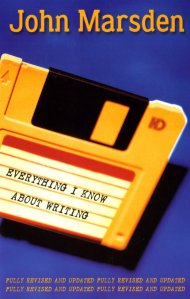
"Everything I Know About Writing" Review

So, number 2 book in my 100+ Book Challenge for 2010 was John Marsden’s “Everything I Know About Writing”…

This is a guide to writing, written by a top-selling and much-loved (particularly by me!) Australian author.

The blurb claims that “Everything I Know About Writing” is “as readable as a novel”…and it really is.

Throughout, Marsden gives tips about what makes good and bad writing, using his deep and wide knowledge of literature and language. He doesn’t just list tips on what’s good or bad – he uses a range of really apt examples to drive these points home. While a lot of what is covered in this book is either common writing sense, or something I’ve learned before, Marsden still presents these points in entertaining and clear ways, and I appreciate having so many useful things written in one place as a handy future reference.

Although this book was first originally published in 1993, the examples used in it are so timeless and sound that the book has aged very little in 17 years. Using a mixture of timeless texts taught in most high schools, and great Australian writing, Marsden’s crossover between teaching and writing is obviously one he’s been making the most of for some time now.

As someone who mainly writes young adult fiction, Marsden’s writing guide is an insightful guide for teenagers, simply and clearly spoken – however, it still stands as a helpful and fun guide for writers of all ages. Even if you know most of the stuff that’s being covered, it’s presented in such an entertaining and simple way that it’s still interesting.

A wide range of conventions and problems are dealt with here – how it’s essential to deal with sex and death in writing, how psychology affects characters as much as writers, the rules of reality and how they must apply to writing… One particularly interesting chapter deals with “banality”, where Marsden challenges the connections we automatically make between certain words, particularly in similes and metaphors (eg, “feather” and “light”).

In the “new and revised edition” (which I believe happened around ‘98), a new chapter has been included - “600 Writing Ideas”… these range from ideas for personal stories, starters for short stories, “quickies” (“What is your favorite kitchen appliance, and why?”)… These are perhaps one of the most helpful things about this book. If ever there’s a day where I have nowhere to start, these ideas give me a starting point, which then usually leads on to something else and turns into a story I love… or hate.

The most resounding advice Mr Marsden leaves us with is this; “You’re God when you’re writing: you can do anything. The only unforgivable sin is to be boring”…
“Everything I Know About Writing” is a clear and helpful bundle of tricks to stop your writing from becoming boring.

[Via http://littlegirlwithabigpen.wordpress.com]

<i>Pride and Prejudice and Zombies</i>, by Jane Austen and Seth Grahame-Smith

When dealing with a monster story, there are some rules you can break and some you simply cannot.  Take vampires, for instance.  If you can write a suitably snobby and dismissive blood-sucker, then I’ll buy it when he or she walks down the street in broad daylight munching a clove of garlic.  You’re going to to tell me that werewolves don’t need the full moon to transform?  Fine, I can live with that too.  But when we’re talking zombies, there are two things which must be included: an undying hunger for human brains and a ridiculous number of the walking dead.

My hat is off to Mr. Grahame-Smith for being so bold as to take a beloved piece of English literature and force it into the same genre as The Night of the Living Dead.  Indeed, the writing is such that a reader can be forgiven for thinking that the “unmentionables” were a part of everyday English country life.  Each time Grahame-Smith takes a diversion from the original text, the transition is so smooth that, had Jane Austen been interested in zombies, I’m sure she would have written a strikingly similar novel.  That said, I think the modern author has missed the very real fact that zombies are a singular instance of quantity equaling quality.

Have a look at movies like 28 Days Later or the glory which is Army of Darkness.  Consider the Resident Evil video game franchise, one of the original digital purveyors of undead mayhem.  What do they have in common?  A fat lot of zombies, that’s what!  The reason these games and movies have been so successful, are so entertaining, is that a handful of heroes are faced with a whole horde of walking corpses, hell-bent (sometimes literally) on eating every brain cell they can get their decaying hands on.  As an antagonist type, there’s not much to the zombie.  He’s got no personality which requires development and barely needs a back-story.  You can make zombies out of nearly anything: radiation, misguided science, magic, you name it.  Shoot, you can even get away without an origin story, provided there are enough hellions to cause a distraction.  Zombies are wonderfully disposable, and that’s what makes them great.  In the case of Pride and Prejudice and Zombies, however, this essential rule of undead entertainment has been ignored for reasons I cannot fathom.

Instead, what we have in this book is exactly what the title suggests: it’s Pride and Prejudice with some zombies.  Most of the book stays true to the original, and there are long stretches in the middle where nothing whatsoever has been changed.  The greatest concentrations of “bone-crunching zombie mayhem” come near the beginning and the end.  Indeed, there are only two or three scenes which are divergent enough to justify the back cover’s promise of a “blood-soaked battlefield.”  Don’t get me wrong, Pride and Prejudice is a fine novel and made a pretty good movie too, but that’s not why I picked up this book.  Perhaps I was a victim of my own expectations, but I couldn’t help the encroaching boredom as I read more of Jane Austen’s words than Seth Grahame-Smith’s.

Going into the book, I expected a parody along the lines of Mel Brooks’ Young Frankenstein or Robin Hood: Men in Tights.  It seems to me that if you are going to work over a classic, you had better go all the way.  In this case, occasionally having Elizabeth Bennet mention her Shaolin training  or her never-ending battle against the “stricken” just isn’t enough.  The reader needs to see her employing this much-vaunted skill more often, otherwise there’s little encouragement to choose this version over the original.  It took until Chapter 56 before I found something which really met my expectations.

When Lady Catherine visits Elizabeth to order her not to marry Darcy, it is a tense enough scene in the original.  Under Grahame-Smith’s pen, however, it turns into a thrown-down in the dojo, complete with Elizabeth handily dispatching a few ninjas before going toe-to-toe with Lady Catherine.  The action is well written and the scene is a great departure from the manners-driven world of Hertfordshire.  It starts with an important part of the original story and heads in a completely different direction, as any good parody should.  Had there been more of an effort to tell the story this way, I think the book would have become infinitely more entertaining.  As it is, the light sprinkling of action and brain eating simply isn’t enough to make the new novel live up to its potential.

[Via http://runningbowline.com]